

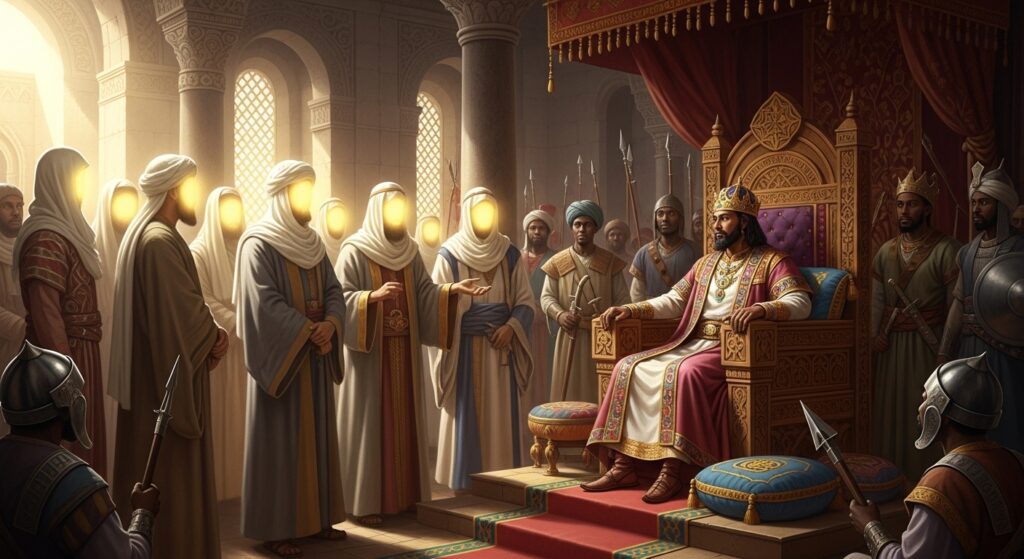
Muslims Migration to Abyssinia
Many years ago, even before the migration to Madinah, there was a small group of the Muslim Ummah that migrated to seek refuge. This migration was not to Madinah, but elsewhere. This happened because Islam was spreading slowly at that time, and many people had not yet embraced the faith. The oppressive Quraysh of Makkah decided that whoever supported Prophet Muhammad ﷺ would be mercilessly tortured and killed. The only purpose of this migration was survival, so that they could save their lives by moving away from Makkah. They chose a land where Christians lived. A small group of Sahaba رضي الله عنهم reached there by crossing the Red Sea. The name of this land was Abyssinia, which we know as modern-day Ethiopia. Today, let us learn the story of this first migration in Islam. Did that Christian king give refuge to the Muslims in his land? Or did he also inflict the same oppression upon them that the Quraysh of Makkah did? In this article, we will learn about this event.
SITUATION IN MAKKAH
The conditions in Makkah at that time were very difficult and painful for Muslims. Day after day, they endured torture at the hands of the oppressive Quraysh, listened to their harsh words, and were insulted. People even stopped maintaining any contact or trade relations with them. Their belongings, wealth, livestock, and houses were seized. All of this was happening because Prophet Muhammad ﷺ had started publicly proclaiming the message of Tawheed (the Oneness of God). These teachings of Tawheed and this new religion were not beneficial things for the leaders of Makkah at that time.
At that time, the greatest power of Makkah was the Kaaba. It was not as we see it today; the pagans of the Quraysh used to keep their idols inside the Kaaba. These were the same idols that people worshipped. People came from far-off lands to worship because the Kaaba had become a place to keep all kinds of idols; every type of idol was there. It had become a kind of holy city for idol worshippers and an economic treasure for Makkah. The power of Makkah lay in these idols, as their economy ran on them. Makkah was a large and powerful city in the Arabian land.
They felt that their source of income would be destroyed because of Prophet Muhammad ﷺ. This was because the Kaaba is very sacred to Muslims, and if everyone became Muslim, they would unite to remove all the idols from the Kaaba, ending idol worship forever. Therefore, Prophet Muhammad ﷺ and the religion of Islam became a threat to the Quraysh.
First, the leaders of the Quraysh spoke to the Prophet’s ﷺ uncle, Abu Talib ibn Abdul Muttalib, and told him to convince the Prophet ﷺ not to do this and not to come in their way. Sometimes they gave threats, and sometimes they tried to entice him. They said they would give Muhammad ﷺ whatever he wanted if he would stop preaching this religion. But Prophet Muhammad ﷺ did not listen to them, nor did Abu Talib ibn Abdul Muttalib, because he supported his nephew. When they achieved nothing after trying everything, and they saw that some people had already embraced faith due to Prophet Muhammad’s ﷺ preaching, they left the Prophet ﷺ alone and went after the people who supported him—the Sahaba رضي الله عنهم.
PERSECUTION OF MUSLIM IN MAKKAH
Later, when the oppressive Quraysh saw that they could no longer control Prophet Muhammad ﷺ, they started committing atrocities against other people. At that time, many of the Sahaba رضي الله عنهم were poor or were slaves. Some were wealthy and belonged to the Quraysh tribe itself, but because they had accepted Islam, their families—their parents, brothers, and sisters—broke ties with them and refused to help, abandoning them. Consequently, they also went through great difficulties. The Quraysh would publicly execute and torture the Sahaba رضي الله عنهم.
Among those victims was a very famous Sahabi, Bilal ibn Rabah رضي الله عنه, who had accepted Islam. He was a slave. When the rumor of his conversion reached his master, he oppressed him greatly. He would make him lie in the scorching sun and place a heavy stone on his chest so that, due to the pain, he would abandon Islam. But Bilal ibn Rabah رضي الله عنه never did what they wanted and kept saying, “Ahad, Ahad” (One, One God). After this, Abu Bakr رضي الله عنه sent one of his men to buy Bilal from that oppressor so that Abu Bakr رضي الله عنه could set him free. Abu Bakr رضي الله عنه paid a high price and liberated Bilal.
On the other hand, there was another Sahabiyah named Sumayyah bint Khayyat رضي الله عنها; she was an elderly woman, and her husband’s name was Yasir ibn Amir رضي الله عنه. Both were early converts to Islam. They had a son, Ammar ibn Yasir رضي الله عنه; all three were companions of Prophet Muhammad ﷺ. Sumayyah bint Khayyat رضي الله عنها is also called the first martyr of Islam. When she refused to follow the Quraysh and kept her faith in Allah and His Prophet firm, the Qurayshi leader Abu Jahl killed her using a spear. Yasir ibn Amir رضي الله عنه, the husband of Sumayyah bint Khayyat رضي الله عنها, was also killed, becoming the second martyr of Islam. Their son, Ammar ibn Yasir رضي الله عنه, survived even after enduring torture.
PROPHET MUHAMMAD’S ﷺ DECISION
When all of this was happening, Prophet Muhammad ﷺ saw how the Quraysh were inflicting atrocities on his companions. Although Prophet Muhammad ﷺ belonged to the Quraysh tribe—the Banu Hashim tribe—from which he received protection, the other companions were not receiving this protection. Then Prophet Muhammad ﷺ told his companions to go to a distant land where a Christian king lived who was very just. After this, a small group of the Prophet’s ﷺ companions set out for Abyssinia. Prophet Muhammad ﷺ and Abu Bakr رضي الله عنه did not go with them and remained in Makkah. After completing a journey of many days, that small group crossed the Red Sea and reached Abyssinia, where they appeared in the court of that Christian king. The king’s title was Najashi (the Negus). Because Najashi was a very merciful king, he agreed to let them stay in his land.
In a few days, the Quraysh found out that some people—the Sahaba رضي الله عنهم—had left Arabia and gone to Abyssinia. They feared that Islam might spread outside Arabia and that the Muslims would receive the protection of the King of Abyssinia. Therefore, they decided to send expensive gifts to the King. They did exactly that, sending precious and expensive gifts. This was led by Amr ibn al-As, who was a non-Muslim at that time. He and a few other Quraysh went to Abyssinia, gave gifts to the King, and placed only one request before him: that the Muslims were rebelling against their own country and religion and were troublemakers. Therefore, they asked him to send them back to Makkah.
After hearing all this, Najashi did not blindly hand the Muslims over to the Quraysh; instead, he called the companions to him. Then Jafar ibn Abi Talib رضي الله عنه, who was the cousin of Prophet Muhammad ﷺ, came forward. The King asked him why they had left their land and come there. Then Jafar ibn Abi Talib رضي الله عنه explained everything. He described everything that was happening to them and the other companions in Makkah:
- Injustice in Makkah
- Idol worshipping
- Oppressing the weak
- Breaking ties with family members
After this, he said that Allah had sent a Prophet for all of them for their guidance, who is truthful and just. Then he told how the Quraysh had tortured them and killed many companions. Hearing all this, Najashi spoke and asked Jafar ibn Abi Talib رضي الله عنه to recite something from the Quran. Jafar ibn Abi Talib رضي الله عنه then recited Surah Maryam. Hearing this, the King and his bishops were shaken. According to reports, when Jafar ibn Abi Talib رضي الله عنه recited Surah Maryam, tears came to the eyes of the King and the people in his palace.
Najashi, after hearing the Muslims, refused to hand them over to the Quraysh. The Muslims were allowed to live peacefully in Abyssinia. Seeing this, the Quraysh still did not give up and went back for a second attempt. They again requested the King to return the Muslims to them so they could take them to Makkah. This time, those oppressive Quraysh told the King that the Muslims do not believe in Hazrat Isa (alaihis salam) the way you do; they say that Isa is not the son of God. Hearing this, the King called them again and asked, “What does your book say about Isa?” Jafar ibn Abi Talib رضي الله عنه again stood forward. He slowly explained to the King from the Quran:
- Isa (alaihis salam) was a servant of Allah
- A Messenger of Allah
- Born miraculously to Maryam (alaihis salam)
- But he was not divine nor the son of God; he was just a Prophet
After hearing all this, although what Jafar ibn Abi Talib رضي الله عنه said was different from the Christian belief (as they consider Hazrat Isa divine and equal to God), the King did not show any harshness. He picked up a stick, drew a line in front of Jafar ibn Abi Talib رضي الله عنه, and said:
“The difference between you and us is only as much as this line, no more.”
After this, the King returned all the gifts to the Quraysh and said that he would never send the Muslims back with them, even if they offered mountains made of gold.
ALSO READ: Hidden Sins That Destroy Fasting Why Your Ramadan Fast May Not Be Accepted 2026
ALSO READ: Watching Islamic Content In 2026 But No Change?
ALSO READ: How Shaytan Uses Good Deeds to Mislead People (The Hidden Trap of Distorted Sins) 2026
LIFE OF MUSLIMS IN ABYSSINIA
The Muslims spent many years in Abyssinia. They lived and worked there. Some of the Sahaba رضي الله عنهم returned to Arabia when the migration to Madinah took place, while some remained there. Najashi, who was the King of Abyssinia at that time, later accepted Islam and left Christianity. He changed his name from Najashi to Ashama ibn Abjar. Although according to some reports, Najashi never met Prophet Muhammad ﷺ, Allah knows best. However, there is an event that proves Najashi actually accepted Islam: when he passed away, Prophet Muhammad ﷺ performed the Salat al-Ghaib (funeral prayer in absentia) for him. This prayer is performed for someone who has passed away but whose funeral prayer was not led locally, or who is in a distant land, as he was in Abyssinia while the Prophet ﷺ was in Madinah.
CONCLUSION
So that was it for this article; I hope you learned something new from it. You have now learned how the Quraysh oppressed and tortured Muslims in the starting phase of Islam, and how they even killed many. This was the event of the first migration in Islam, which many people might not know. Most people know about the migration to Madinah, but they do not know about the migration to Abyssinia and its story. We learned about the first martyrs of Islam and Najashi, who was a merciful King of Abyssinia. We saw how, even after hearing the thousands of things the Quraysh said against the Muslims, he supported them and allowed them to stay in his land. Later, Najashi accepted Islam and changed his name to Ashama ibn Abjar. Prophet Muhammad ﷺ leading the Salat al-Ghaib for him is a great proof of the King’s acceptance of faith, because funeral prayers and Salat al-Ghaib are not performed for those who do not embrace faith.
That is all for today. We will meet with a new topic next. Take care of yourself and your family. May Allah forgive all our sins and accept our supplications. Ameen.
Really good mashallah